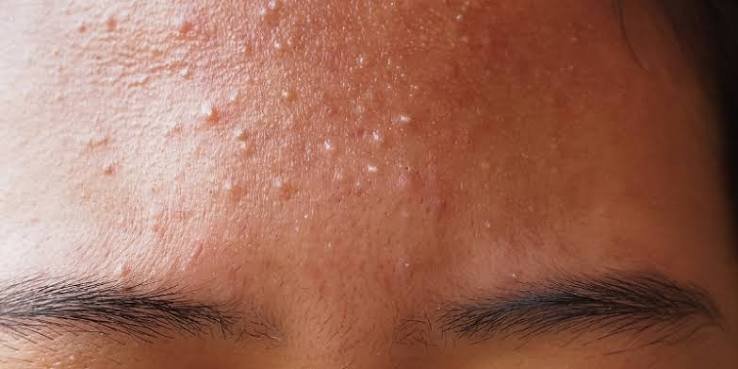
Forehead acne and pimples represent clogged and/or irritated hair follicles that appear in the forehead zone only. Breakouts of this type happen due to oil, dead skin cells, bacteria, and other debris becoming stuck inside hair follicles. Lesions may include small flesh-colored bumps or large painful cysts that will take weeks to go away.
Many ask what does acne and pimples on the forehead mean. As a rule, it does not always mean poor hygiene and bad digestion as many people think. Modern dermatology claims that acne appears due to the fact that forehead falls into the T-zone which has many sebaceous glands producing oil. In case oil production gets too high, pores get easily plugged and inflamed.
One more reason why forehead breakouts appear is the close proximity of the area to hair products, sweat, hats, helmets, and pollution of the environment. Even some harmless actions like constantly touching the forehead, wearing a tight cap, or oily bangs lying on the forehead can be responsible for frequent pimples. It is easier to cure breakouts once you know the causes of them.
It was also proved by the research that the occurrence of breakouts in the forehead area is not uncommon among people with acne. According to one of the studies, around 33.5% of people with facial acne had forehead breakouts.
Different Types of Forehead Acne and Pimples
All types of acne do not look similar. Identifying the type of acne you have will help in choosing the best course of action to deal with it.
Whiteheads
Whiteheads are small bumps that arise because of the blockage of oil and dead skin cells below the epidermis. These normally take the shape of small white or flesh-colored dots appearing on the forehead.
Whiteheads fall into the category of non-inflammatory acne because they are not painful or difficult to treat compared to cystic acne. Whiteheads usually form due to the excessive use of heavy moisturizer, hair serum, and oil-based makeup that cause pore blockages.
Blackheads
The development of blackheads occurs as a result of blocked pores and oxidation of the trapped contents due to exposure to air. It is not the dirt that causes the color but the oxidation of sebum and skin debris.
The formation of forehead blackheads happens as a result of the build-up of sweat, gels, and dirt around the hairline area. Such blackheads often cause the skin to be uneven in texture. Salicylic acid chemical exfoliators work best on these blackheads since they can penetrate deep into oily pores.
Papules
Papules are inflammatory bumps without any visible pus. Papules are usually very sensitive to the touch and appear in groups.
Papules appear because of irritation of clogged pores due to bacteria and the body’s reaction to them. Touching or squeezing of the papule often makes the inflammation worse.
Pustules
These blemishes have an almost identical look to papules but have a visible center of yellowish or whitish pus. These are what are typically considered classic pimples.
Normally, they emerge suddenly and can last for a few days. Using a spot treatment with benzoyl peroxide may help to decrease the bacterial content and promote healing.
Nodules and Cysts
Nodules and cystic acne are a form of acne which develops in the deep layers of the skin.
Normally, they are painful, inflamed and resistant to any treatment without prescription. Usually, cystic acne leaves scars. It is recommended to consult with a dermatologist if you have such eruptions.
| Acne Type | Appearance | Pain Level | Scar Risk |
|---|---|---|---|
| Whiteheads | Small white bumps | Low | Minimal |
| Blackheads | Dark open pores | None | Low |
| Papules | Red bumps | Mild | Moderate |
| Pustules | Pus-filled pimples | Moderate | Moderate |
| Cysts | Large painful lumps | High | High |
Causes of Forehead Acne and Pimples
Knowledge about the causes behind the problem is necessary for effective treatment of forehead acne.
Overproduction of Sebum
Overproduction of sebum is one of the main reasons for forehead acne. Sebum is produced by the sebaceous glands as a protective mechanism for skin and the problem happens when these glands go overboard.
People who have oily skin will see that their forehead appears oily after just some hours of cleaning it because of the excessive production of sebum, along with the dead skin cells, creating an ideal environment for clogging pores.
Warm climate, humidity, and genetics may increase oil production. People who naturally have oily skin must stay away from thick creams.
Hormonal Acne
The hormones are highly important in causing acne problems. The rise of the level of androgen in the pubertal years, during menstruation or pregnancy and times of hormonal imbalance causes acne.
Most women develop forehead acne before the menstrual period due to the imbalance of estrogen and progesterone levels. Sometimes conditions like hormonal disorders can cause the condition too.
Acne does not affect only teens; now adult acne has also become very prevalent especially in women above the age of 25.
Hair Products and Hair Oils
Ever noticed a breakout of acne soon after using a different shampoo or facial cleanser?
It is because many hair care products have certain substances in them which tend to clog up the pores when they come in contact with your facial skin. Hair waxes, pomade, conditioner and coconut oil are some examples of those.
Keep your hair off your forehead and always wash your hair to prevent breakouts. People with oily scalp face acne problems on their hairline and upper part of the forehead.
Stress and Inadequate Sleep
Stress becomes additional fuel for the condition which is becoming more severe and causes the production of the hormone called cortisol, which increases oil production and inflammation.
Inadequate sleep also affects the skin’s ability to regenerate. Lack of sleep in the night, workplace stress, or exams might be reasons for rapid breakout.
The relief of stress through meditation, exercising, or taking up some hobbies might help improve skin condition.
Eating and Lifestyles
Even though the food is not the only reason for acne problems, there are eating habits which can worsen the situation.
Food items which can worsen acne are:
- Sugary drinks
- Highly-processed junk food
- Excessive dairy food
- Saturated fat fast foods
The intake of enough amount of water and foods rich in antioxidants can make the skin healthier.
Dirty Pillowcases and Sweat
Sweat does not cause acne. But sweat combined with bacteria, dirt, and friction might clog the pores of the skin.
People who have active lifestyle and spend time in gym might get forehead pimples because of exercising. Changing the pillowcases frequently and washing skin from sweat might help keep the pores clear.
How to Get Rid of Forehead Acne and Pimples
People looking for ways to get rid of forehead acne and pimples tend to want quick solutions. Unfortunately, acne treatment is more like gardening than painting a wall: you nurture your skin into becoming healthier over time rather than expecting any quick changes.
Medical Solutions
There are many clinically proven approaches to treating forehead acne.
Salicylic acid
It is a beta-hydroxy acid that dissolves oil in pores and helps prevent blackheads and whiteheads.
Benzoyl Peroxide
This substance decreases acne bacteria and reduces the inflammatory reaction. It works especially well for red pimples and pustules.
Retinoids
Topical retinoids increase skin cells’ renewal and reduce blockage of the pores. They work really well, but might lead to drying initially.
Oral medications
Dermatologists can prescribe antibiotics, hormone-based treatment, or isotretinoin for severe acne cases.
According to dermatological recommendations, the prompt treatment is very important because the untreated inflammatory acne might cause the formation of scars and hyperpigmentation.
Natural Treatment
Natural remedies cannot substitute a medical treatment in the case of severe acne but might serve as an addition to your skincare routine.
Aloe vera gel is rich with compounds that have a soothing effect on skin.
Green tea extracts are antioxidants that might help to reduce the redness.
Honey face masks might have some antibacterial effects.
Products with the extract of tea tree oil prepared in a safe concentration are also effective, but the direct application of the pure essential oils is not recommended because of the irritative effect.
When to See a Dermatologist
It is necessary to visit a dermatologist when:
- There are scars left by acne
- OTC products stop working after three months
- Cysts appear
- Acne causes psychological issues
Daily Routine for Preventing Forehead Breakouts
Routine is more important than pricey products. A simple regimen done regularly produces better outcomes than using several different products sporadically.
Morning Routine
Start off with washing your face with a gentle foaming cleanser designed to tackle acne. No harsh scrubs since they will only harm the barrier of the skin.
Then use a light serum, which will help in regulation of sebum production as well as strengthen the skin barrier. Put a non-comedogenic moisturizer after that to hydrate.
Never forget to apply sunscreen since ultraviolet light exacerbates acne spots and interferes with healing process. Get broad spectrum SPF of 30 or more, which is oil-free.
Also make sure that hair is washed and styled away from the forehead before leaving the house, if possible.
Evening Routine
The goal of evening skincare is repairing the skin.
Cleanse face thoroughly from all the makeup, sunscreen and sweat with a gentle cleanser. Double cleansing can be beneficial if you use heavy makeup.
Then use your treatments such as salicylic acid or adapalene according to the instructions. Add active ingredients slowly in order to avoid irritation.
Apply a fragrance-free moisturizer to maintain balance in the skin.
Other tips of healthy behavior include:
- Change pillowcases twice a week
- Wash hats regularly
- Clean phone screens
- Drink enough water daily
- Get seven to eight hours of sleep
- Don’t squeeze your pimples
Think of your skin care routine as a toothbrushing routine. It’s not tragic to miss a day occasionally, but regularity is very important to avoid skin issues.
Conclusion
Acne and pimples on the forehead are very common, but they do not have to be part of one’s life for good. To understand forehead acne, one must know that acne appears on the forehead due to extra oil on the face, clogged pores, changes in hormones, stress, or unhealthy lifestyle, not bad hygiene.
Knowledge of all types of acne helps choose the right treatment: if it comes to treating blackheads, then salicylic acid is required; for treating inflamed pimples, benzoyl peroxide is used, and prescription medications help treat cystic acne. And if someone asks how to get rid of forehead acne and pimples, one must know that time and persistence make a difference.
FAQs
What do acne and pimples on the forehead mean?
It usually means blocked pores due to too much oil, accumulation of dead skin cells, hormonal shifts, stress, or using irritative hair care products.
How long will it take for forehead acne to get better?
Light acne usually heals within four to six weeks, whereas medium or severe acne may need a few months of regular treatment.
Can greasy hair cause pimples on my forehead?
Yes. Greasy hair and harsh hair styling products can cause sebum and impurities to stick to your forehead, causing clogged pores.
Can I pop pimples on my forehead?
No. Picking pimples will force the bacteria further inside your skin, causing inflammation, scars, and hyperpigmentation.
Which is the best component for forehead acne?
Salicylic acid is considered one of the most effective components because it gets into oily pores and clears debris that is stuck in there.